
Global-grade intralogistics automation, engineered locally for LATAM.
We design and integrate intelligent material-flow systems that operators can understand, maintenance teams can support, and managers can defend with measurable operational value.
Recover margin by reducing cost-to-serve.
In labor-intensive distribution operations, excessive walking, repeated handling, manual coordination, and overtime during demand peaks quietly increase the cost of every order.
Machinno3D identifies where guided picking, conveying, control, and traceability can reduce manual hours per order, increase throughput, and create a defensible business case—implemented in stages rather than through a risky, all-at-once transformation.
From order data to material movement, one coordinated system.
Machinno3D connects physical flow, operator guidance, industrial control, validated data interfaces, and robotics-ready architecture so the operation works as one coherent system—not as a collection of isolated machines.
Material flow
Picking stations, conveyors, routing, buffers, and handling points configured around order volumes, SKU profiles, ergonomics, and real site constraints.
Control and guidance
Sensors, PLC logic, pick/put-to-light guidance, HMIs, and diagnostics structured so operators understand the process and maintenance teams can trace system status and faults.
Integration
Controlled interfaces to WMS, ERP, databases, and operational tools are validated before implementation, using the safest practical connection without disrupting the client’s core system.
From receiving to dispatch, the flow must work as one system.
Machinno3D engineers the points where materials, operators, machines, and operational data must remain coordinated across receiving, replenishment, picking, consolidation, sorting, and dispatch.
Physical flow
Conveyors, routing, accumulation, buffers, workstations, and handling logic designed around order volume, SKU behavior, ergonomics, and site constraints—reducing unnecessary movement, handling, and waiting.
Operational coordination
Guided workflows, sensing, industrial control, HMIs, traceability, and diagnostics that make system behavior understandable to operators and visible to supervisors and maintenance teams.
Staged automation and robotics readiness
Modular control, validated data interfaces, traceable operating states, and clearly defined equipment boundaries that support today’s operation while preserving a controlled path for future robotic equipment—without forcing a premature replacement of the client’s core systems.
Selected project · Colombia · 2025–2026
Engineering proven through real intralogistics work.
Installation, corrective engineering and commissioning of an imported intralogistics system for a catalog-based distribution operation.
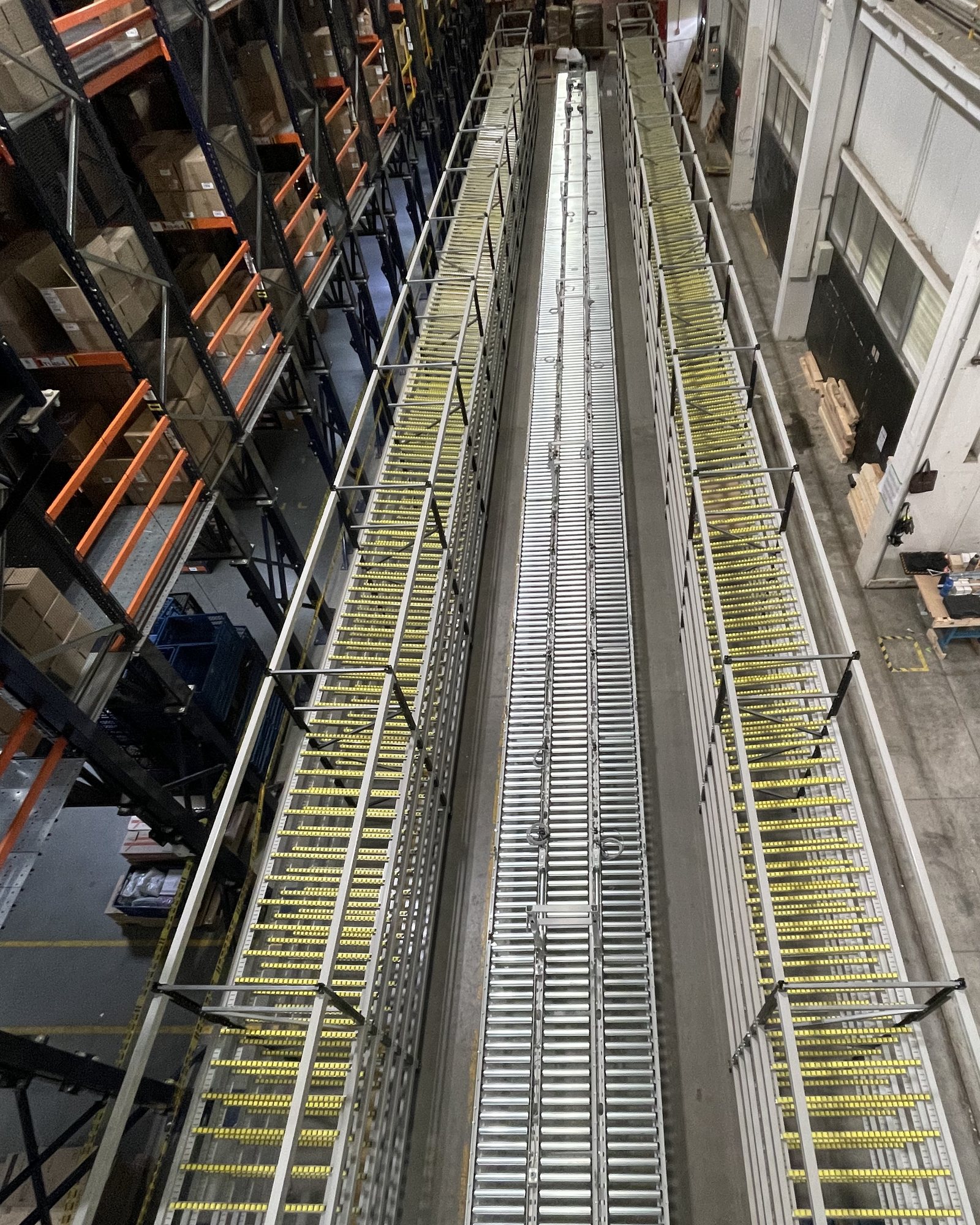
16
picking stations
Approximately
900
pick-to-light electronic boards
21
decentralized conveyor-control units
Commissioned, in operation and formally accepted by the customer.
Prove value before expanding the system.
Machinno3D begins with the current operation, not with a predetermined technology. We establish the operational baseline, define a measurable target, validate integration readiness, and implement a controlled scope before recommending further expansion.
Operational baseline
We examine order profiles, material routes, manual hours, handling points, errors, overtime, equipment constraints, and current system behavior to identify where automation could create meaningful value.
Architecture and integration readiness
We validate equipment interfaces, WMS or ERP conditions, available data sources, control boundaries, maintainability requirements, and the path toward future robotics before implementation begins.
Value case and scope
The proposed scope is tied to defined operational measures such as cost-to-serve, throughput, labor demand, traceability, and downtime. Assumptions, boundaries, and expected results must be clear enough for management to evaluate and defend.
Staged implementation and acceptance
The system is built, tested, commissioned, and accepted against agreed technical and operational criteria. Additional automation follows proven results—not enthusiasm, pressure, or an oversized initial promise.
Identify where automation can create defensible value.
Bring us the operation, bottleneck, or material-flow problem—not a predetermined technology. We can evaluate where automation may reduce cost-to-serve, improve throughput, strengthen traceability, or reduce operational risk, and whether the case is strong enough to proceed.